Bringing Healing to the Spirit of a Land and Its Peoples
Established in 1995, The Cedar Tree Institute is a nonprofit organization providing services and initiating projects in the areas of mental health, interfaith collaboration, and the environment. Based in Northern Michigan, it offers mental health services on an individual basis, works with faith communities and environmental groups, and is involved in ongoing partnerships with the US Environmental Protection Agency, the United States Forest Service, and five American Indian tribes.
Mental Health
Interfaith Collaboration
Environment
Recent News
What we've been up to lately

Spirit of Place 2024: Experiences of Engaged Spirituality
Spirit of Place 2024 Experiences of Engaged Spirituality We are offering two retreats this year as part of our ongoing series “Spirit of Place.” The first retreat, set in Michigan, focuses on the critical role of...
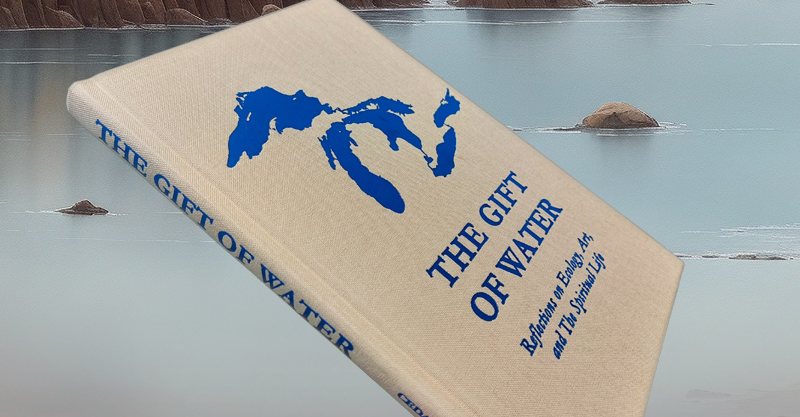
The Gift of Water book has been published
We are pleased to announce that The Gift of Water book is now out and available as a limited edition hardcover or eBook. You can purchase the book on our website by following this link: https://cedartreeinstitute.org/product/the-gift-of-water/ The collection of writings comprising The Gift of...
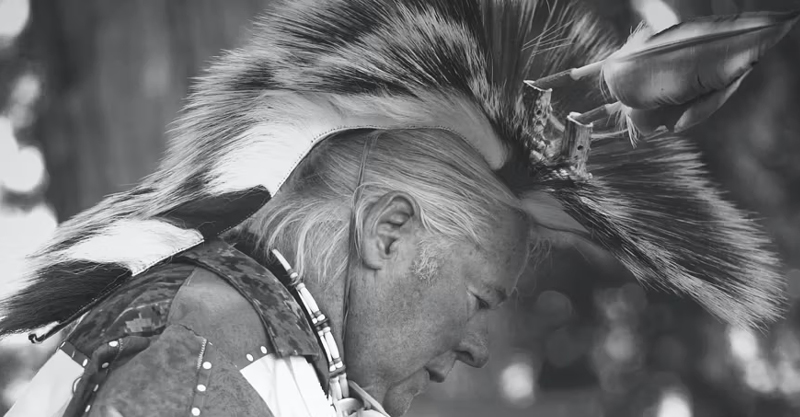
The Return (Documentary Film)
A story of hope and healing about the return of Fr. Jacques Marquette’s bones to their original burial place in the Northern Great Lakes Basin. His remains were carried there by Native American descendants of the...

Troubled Waters: Health and Hope
The Cedar Tree Institute Presents AN EVENING WITH THE INTERFAITH WATER STEWARDS Thursday Evening, April 18, 7-8:30 pmMessiah Lutheran Church: 305 W Magnetic St., Marquette Michigan Introducing a two-year initiative to help protect and ensure good...
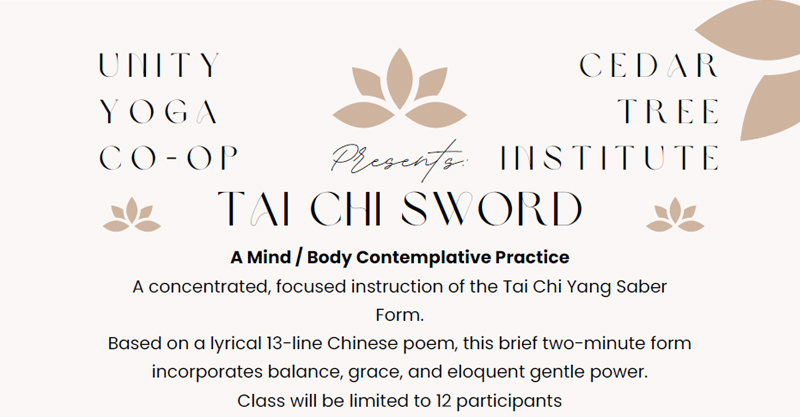
Tai Chi Sword
Unity yoga co-op and Cedar Tree institute Present: TAI CHI SWORD A Mind / Body Contemplative Practice A concentrated, focused instruction of the Tai Chi Yang Saber Form. Based on a lyrical 13-line Chinese poem, this...
Tai Chi Schedule 2024
WEEKLY TAI CHI PRACTICE With Jon & Diana Magnuson, Instructors During Autumn, Winter, and Spring months (September – May) The Cedar Tree Institute offers Tai Chi classes EACH WEDNESDAY from 5:30 – 6:30 p.m. $10 per...
Winter 2024 Ecotone Newsletter
We are part of sacred work of which we may never see the ending. -Oscar Romero, Bishop of El Salvador.Outspoken advocate for the poor. Assassinated 1980. I have a friend who lives on the Pacific Coast...

Violence, Religion, and Hope
*This article, written by Jon Magnuson, was published in the Mining Journal November 17, 2023 The heart-breaking recent loss of over 4,000 children’s lives in the Middle East, perpetuated by religious extremists, approaches limits of human...
Fall 2023 Equinox Newsletter
A small group of us gather in a circle in the lobby of an old historic Inn on the edge of the Huron Mountains here in Northern Michigan. Among us are three social workers, a retired...
Newsletter
Ecotone and Equinox Newsletters
Winter 2024 Ecotone Newsletter
We are part of sacred work of which we may never see the ending. -Oscar Romero, Bishop of El Salvador.Outspoken advocate for the poor. Assassinated 1980. I have a friend who lives on the Pacific Coast of Washington State. For over forty years he’s worked in various capacities as a non-Native with a small, vibrant Native American tribe, most significantly as part of their Treaty Protection Task Force. He’s engaging and intense, skilled in navigating the complexities of cross-cultural interactions. One early morning along a rocky shoreline trail on Puget Sound, I remember him emerging from the cold waters...
Fall 2023 Equinox Newsletter
A small group of us gather in a circle in the lobby of an old historic Inn on the edge of the Huron Mountains here in Northern Michigan. Among us are three social workers, a retired physician, a writer, a nurse, a retired firefighter, four clergy. We’re exploring our various experiences of being personally lost over the years. Physically. Emotionally. Spiritually. There’s plenty to talk about. As our point of reference, we’re using the insights of Lawrence Gonzales. In 1989 he published “Deep Survival.” The author was fascinated by why some individuals find their way out after being lost...
Spring 2023 Equinox Newsletter
Recently, a respected, beloved musician in our community invited me over for a visit to her home. She graciously gave permission to share a portion of our conversation with readers of this newsletter. That particular afternoon, she, her husband, and I sat in the living room of their modest home not far from the shores of Lake Superior. A few steps away was the entry to her music studio where, over the years, she taught students lessons on a beautiful grand piano. It’s a cherished piece of craftsmanship; one upon which she’s practiced classical music from Bach, Beethoven, and...
Winter 2023 Ecotone Newsletter
I’m a bit behind in preparing for the winter that’s now descended upon us. I should have known better. A 17 ft. kayak with a broken rudder is still outside on the trailer. It needs, among other things like bags of soil and large garden pots, to be carried inside and placed in their proper spots in our yet-to-be-cleaned-out basement. There’s tending to be done. One of my friends works as a janitor in a local nursing home. Tending. Not just facilities and things, but also the subtle needs of residents who now call that place home. Bob is...
Fall 2022 Equinox Newsletter
A hard time for the planet. A brutal war in Ukraine. Rising inflation around the globe. The pandemic. A climate reckoning that is bringing unexpected, devastating changes to every corner of Mother Earth. Centuries ago, an itinerant carpenter, a healer and prophet roamed the Middle East during another troubled time. The countryside was occupied by an iron-fisted foreign empire. Peoples and tribes were divided along bitter divisions of ethnicity, race, religion, and social class. The wandering prophet raised unsettling questions about perception. “Let those who can see, see,” he said. “Those who can hear, hear.” Then he attended wedding...
Winter 2022 Ecotone Newsletter
In Northern Michigan, mid-winter days are known by traditional Anishinaabe peoples as a “Time of the Starving Moon.” Evenings are occasions for story-telling. Family memories and personal recollections are shared. But also, narratives of sacred myths that, over centuries, have shaped indigenous communities’ self-understanding. Joan Didion, one of America’s finest journalists, wrote, “People live because they tell stories.” She proposed that the stories we choose to tell one another, to live by, are as essential as food, shelter, air and water. Stories offer meaning, courage, hope. They intend to show healthy ways of navigating our world. If Didion’s right,...
Spirituality and Environment
Articles on Spirituality and the Environment by the Institute Director along with occasional guest writers.

Blessing Mother Earth, Father Sky
Earth Day was established in 1970 by Senator Gaylord Nelson. Part of a global response to a massive...
The Power of Promise
Easter 2023 I have great faith in a seed. Convince me that you have a seed there, and...
Eagles, Prayers, Promises
*This article was written by Jon Magnuson, and published in the Mining Journal July, 2022. Eagles, Prayers, Promises...
A Promise
*This article was written by Jon Magnuson, and published in the Marquette Monthly January, 2022. DURING TIME OF...
In adapting to climate change, technology will not save us
*This article was written by Jon Magnuson, and published in EarthBeat October, 2021, by the National Catholic Reporter....

Old Tradition, New Season
*This article was written by Jon Magnuson, and published in the Lake Superior Magazine April / May, 2021....